


How can broken bridge casement windows ensure their airtightness and wind pressure resistance under extreme climatic conditions through structural design?
Release Time : 2026-02-05
In extreme climatic environments such as high altitudes, strong typhoons, sandstorms, or coastal areas with high humidity and salinity, building windows must not only meet daily lighting and ventilation needs but also possess structural toughness to withstand harsh natural conditions. Broken bridge casement windows, with their excellent energy efficiency and reliability, have become the preferred choice for high-end buildings. However, maintaining airtightness, preventing deformation, and condensation even in temperatures as low as -40℃ or under category 12 typhoons requires a series of precise structural designs. These designs, from the profile itself to the sealing system, from connection technology to hardware configuration, collectively construct an all-weather protection system.
1. Multi-cavity thermally broken aluminum profiles: A structural framework combining rigidity and flexibility
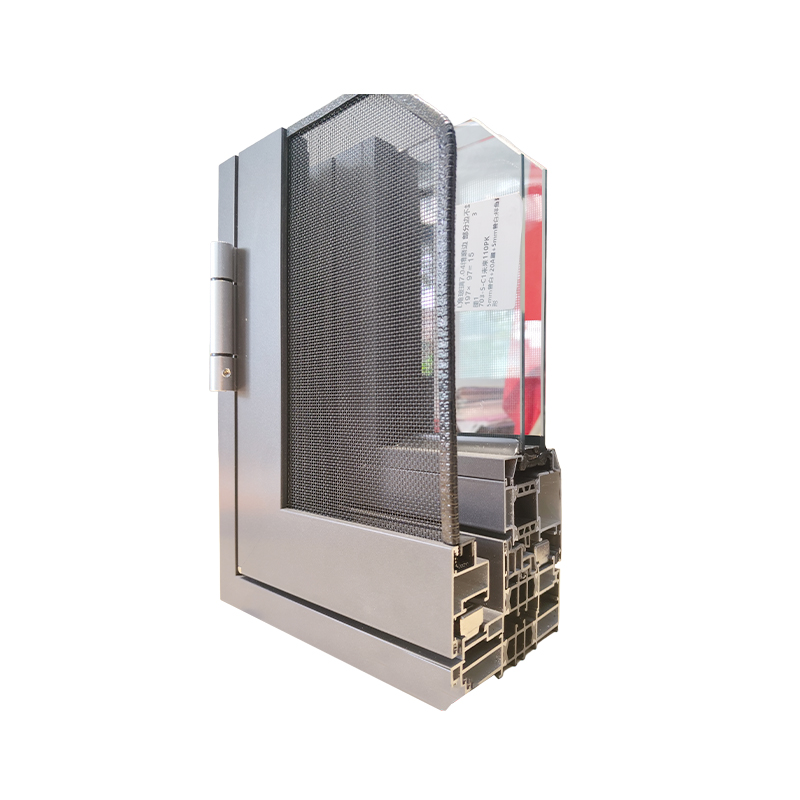
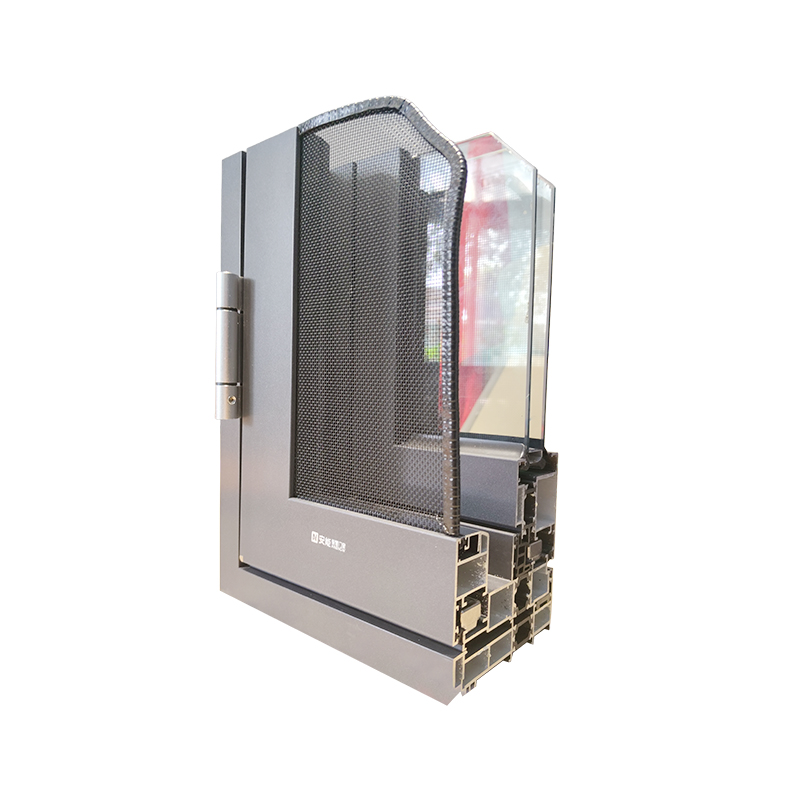
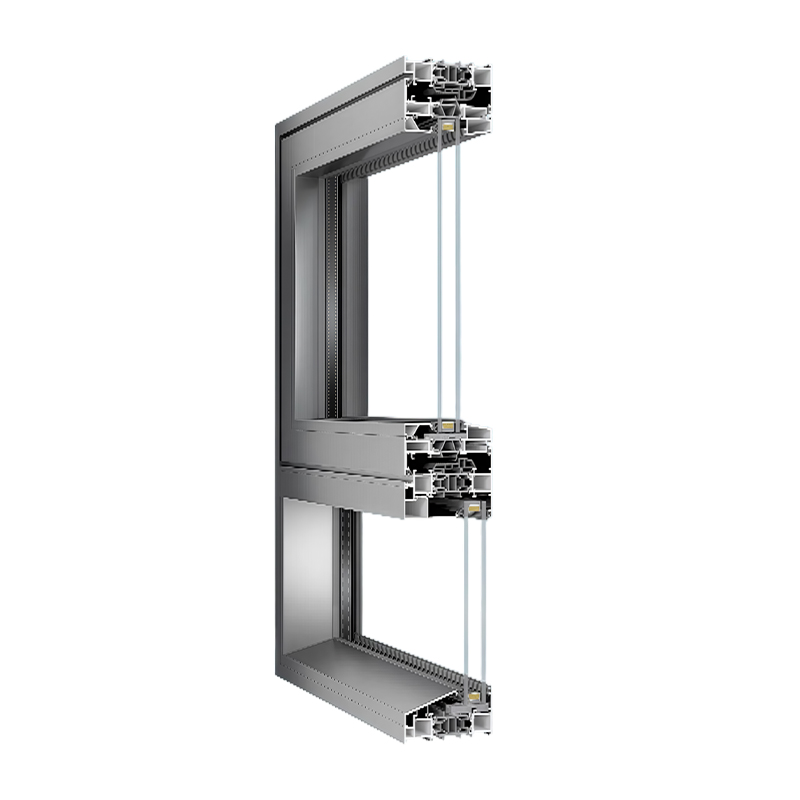
The core of broken bridge casement windows lies in their multi-cavity thermally insulated aluminum alloy profiles. The profiles are designed with 3-5 independent chambers, which not only effectively block heat conduction paths and improve thermal insulation performance but, more importantly, significantly enhance overall bending and torsional stiffness. When encountering strong wind pressure, the multi-cavity structure, like an "I-beam" in construction, efficiently disperses stress and prevents the window frame from twisting and deforming. Simultaneously, the thermal break strip uses high-strength polyamide 66 material, whose coefficient of thermal expansion is close to that of aluminum, preventing interface separation due to temperature differences. This maintains structural integrity in extreme cold or heat, eliminating indoor condensation problems caused by thermal bridging.
2. Three-Layer Sealing System: Dynamically Adapting to Dramatic Temperature and Humidity Changes
Outer equalization strip: Balances internal and external air pressure, guiding rainwater out;
Middle main sealing strip: Provides a core airtight and watertight barrier;
Inner dustproof seal: Prevents dust from entering the profile interior.
EPDM has excellent weather resistance, maintaining its softness and elasticity for extended periods within a temperature range of -50℃ to +150℃, without hardening or cracking. Even in high-altitude or desert regions where the temperature difference between day and night exceeds 50°C, the sealing strips can still tightly adhere to the window sash and frame, ensuring airtightness reaches national standard level 8 and watertightness reaches level 6, effectively resisting the intrusion of heavy rain and sandstorms.
3. High-strength corner connections and multi-point locking hardware
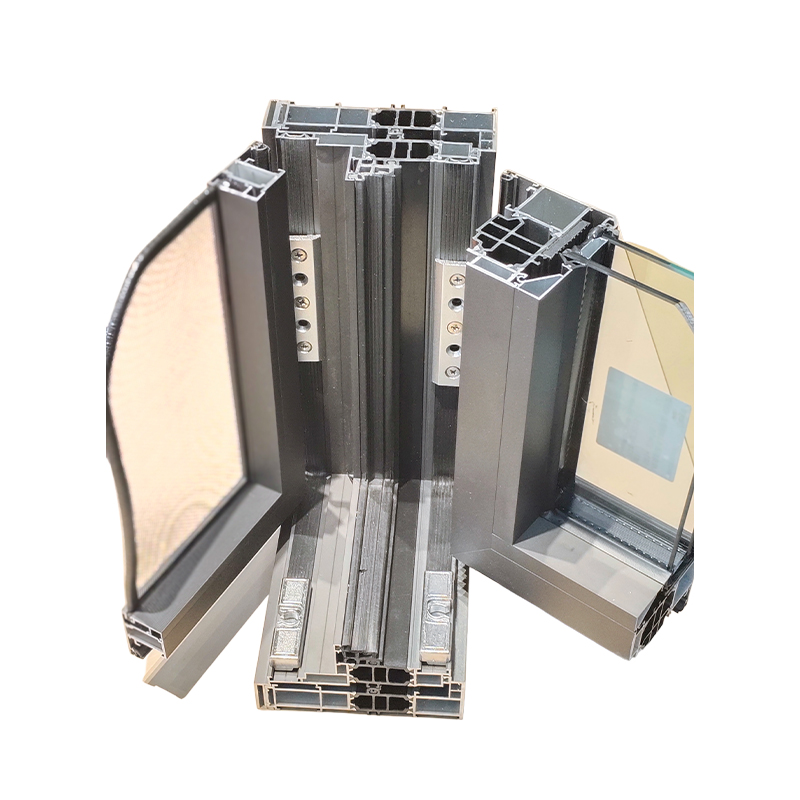
The four corners of the window frame are the weakest points under stress. High-end thermally broken windows use a corner bracket + pin assembly process: first, stainless steel pins are used for precise positioning, then two-component high-strength structural adhesive is injected, making the corners a rigid whole, increasing shear resistance several times over. Combined with a multi-point locking hardware system, multiple locking points simultaneously press the sealing strip when closed, forming a uniform stress surface, significantly improving wind pressure resistance and preventing localized leakage. This design is especially important in typhoon-prone areas, effectively preventing the window sash from being "sucked out" or deformed.
4. Coordinated protection through glass configuration and installation details
The overall performance of the window also depends on the scientific selection of insulated glass. In extreme climate zones, a combination of triple-glazed, double-cavity windows with Low-E coating and argon gas filling is commonly used. This enhances both thermal insulation and the overall rigidity of the glass system. Flexible spacers and silicone structural adhesive are used to secure the glass to the frame, allowing for minor thermal expansion and contraction and preventing stress concentration that could lead to glass breakage or seal failure. The drainage system employs concealed, stepped drainage channels combined with windproof covers to efficiently divert water during heavy rain without backflow.
The reliable performance of broken bridge casement windows in extreme environments is the result of a deep integration of materials science, structural mechanics, and manufacturing processes. It doesn't rely on a single "black technology," but rather on the systematic synergy of the frame, seals, hardware, glass, and assembly to keep wind, rain, cold, and heat out. In today's increasingly severe climate change environment, this silent yet resilient protection is a crucial cornerstone for the safety, energy efficiency, and comfort of modern buildings.
1. Multi-cavity thermally broken aluminum profiles: A structural framework combining rigidity and flexibility
The core of broken bridge casement windows lies in their multi-cavity thermally insulated aluminum alloy profiles. The profiles are designed with 3-5 independent chambers, which not only effectively block heat conduction paths and improve thermal insulation performance but, more importantly, significantly enhance overall bending and torsional stiffness. When encountering strong wind pressure, the multi-cavity structure, like an "I-beam" in construction, efficiently disperses stress and prevents the window frame from twisting and deforming. Simultaneously, the thermal break strip uses high-strength polyamide 66 material, whose coefficient of thermal expansion is close to that of aluminum, preventing interface separation due to temperature differences. This maintains structural integrity in extreme cold or heat, eliminating indoor condensation problems caused by thermal bridging.
2. Three-Layer Sealing System: Dynamically Adapting to Dramatic Temperature and Humidity Changes
The key to sealing performance lies in a multi-layered, highly elastic sealing system.
Broken bridge casement windows commonly employ a "three-layer sealing" design:
Outer equalization strip: Balances internal and external air pressure, guiding rainwater out;
Middle main sealing strip: Provides a core airtight and watertight barrier;
Inner dustproof seal: Prevents dust from entering the profile interior.
EPDM has excellent weather resistance, maintaining its softness and elasticity for extended periods within a temperature range of -50℃ to +150℃, without hardening or cracking. Even in high-altitude or desert regions where the temperature difference between day and night exceeds 50°C, the sealing strips can still tightly adhere to the window sash and frame, ensuring airtightness reaches national standard level 8 and watertightness reaches level 6, effectively resisting the intrusion of heavy rain and sandstorms.
3. High-strength corner connections and multi-point locking hardware
The four corners of the window frame are the weakest points under stress. High-end thermally broken windows use a corner bracket + pin assembly process: first, stainless steel pins are used for precise positioning, then two-component high-strength structural adhesive is injected, making the corners a rigid whole, increasing shear resistance several times over. Combined with a multi-point locking hardware system, multiple locking points simultaneously press the sealing strip when closed, forming a uniform stress surface, significantly improving wind pressure resistance and preventing localized leakage. This design is especially important in typhoon-prone areas, effectively preventing the window sash from being "sucked out" or deformed.
4. Coordinated protection through glass configuration and installation details
The overall performance of the window also depends on the scientific selection of insulated glass. In extreme climate zones, a combination of triple-glazed, double-cavity windows with Low-E coating and argon gas filling is commonly used. This enhances both thermal insulation and the overall rigidity of the glass system. Flexible spacers and silicone structural adhesive are used to secure the glass to the frame, allowing for minor thermal expansion and contraction and preventing stress concentration that could lead to glass breakage or seal failure. The drainage system employs concealed, stepped drainage channels combined with windproof covers to efficiently divert water during heavy rain without backflow.
The reliable performance of broken bridge casement windows in extreme environments is the result of a deep integration of materials science, structural mechanics, and manufacturing processes. It doesn't rely on a single "black technology," but rather on the systematic synergy of the frame, seals, hardware, glass, and assembly to keep wind, rain, cold, and heat out. In today's increasingly severe climate change environment, this silent yet resilient protection is a crucial cornerstone for the safety, energy efficiency, and comfort of modern buildings.