


How do tilt-and-turn windows achieve ventilation without water ingress during rainy weather?
Release Time : 2025-11-04
In modern architectural window and door design, tilt-and-turn windows, with their unique opening mechanism, have become an ideal choice balancing ventilation, safety, and comfort. Especially during the rainy season, users often face the dilemma of "being afraid of getting wet when the window is open, but feeling stuffy when it's closed." Tilt-and-turn windows cleverly achieve a breakthrough by using a tilt-and-turn opening mechanism, allowing for safe ventilation even in rainy weather.
1. Unique Tilt-and-Turn Structure: Forming a Natural "Rain Curtain Barrier"
The core of tilt-and-turn windows lies in their hardware system, which supports two main opening states: regular inward opening and tilt-and-turn. On rainy days, users simply tilt the upper part of the window sash inward, while the lower part remains tightly closed to the frame. At this time, a tilting gap is formed between the window sash and the frame from top to bottom. When rainwater hits the window at an angle with the wind, most of the rainwater will flow down the glass surface due to gravity because the outer surface of the window sash is still basically vertical or slightly tilted, and is guided out by the windowsill or the drainage channel on the exterior wall. The inward-tilting opening gap is located on the upper inner edge of the window sash, making it difficult for rainwater to "turn" against gravity and wind direction to enter the room, thus forming a natural "rain curtain barrier."
2. Scientific Airflow Organization: Achieving a Balance Between Efficient Ventilation and Splash Prevention
When the window is tilted open, indoor and outdoor air can form convection through the upper gap: hot air is exhausted from above, and fresh air is slowly replenished from other areas of the room, creating a stable "chimney effect." While this micro-circulation ventilation is not as intense as a fully open window, it is sufficient to replace stale indoor air, reduce humidity, and prevent mold growth. More importantly, because the air inlet is located high and faces inward, even if a small amount of splashing raindrops are carried to the window by strong winds, they will quickly slide down to the windowsill drainage channel after hitting the upper inner edge of the window sash, rather than being sprayed directly into the indoor space. Experiments show that under common weather conditions of moderate to heavy rain and wind speeds ≤8, properly installed tilt-and-turn windows almost never experience rainwater seepage.
3. Multi-layered sealing and drainage system for coordinated protection
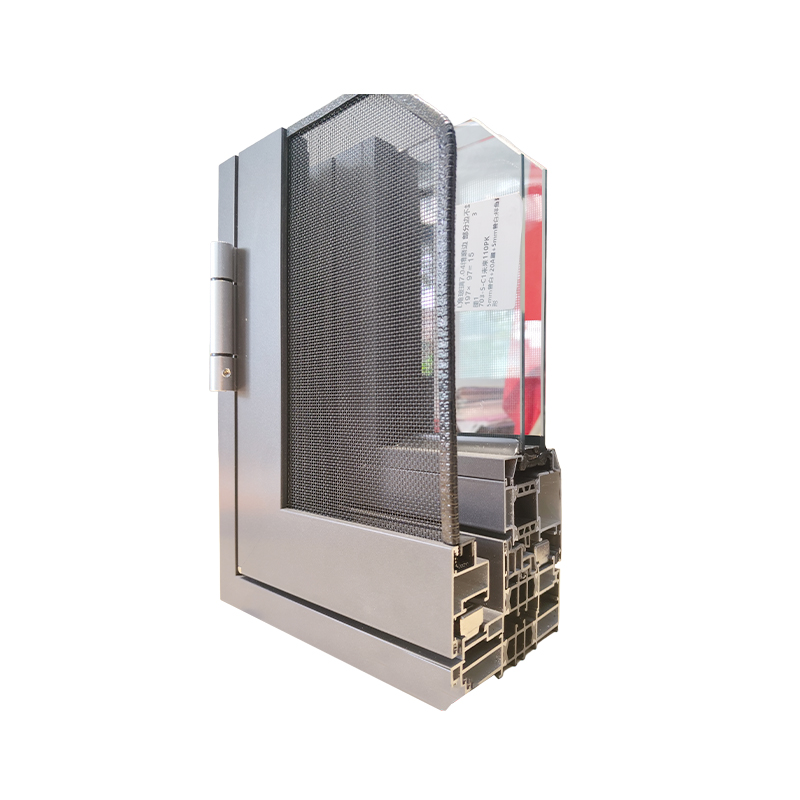
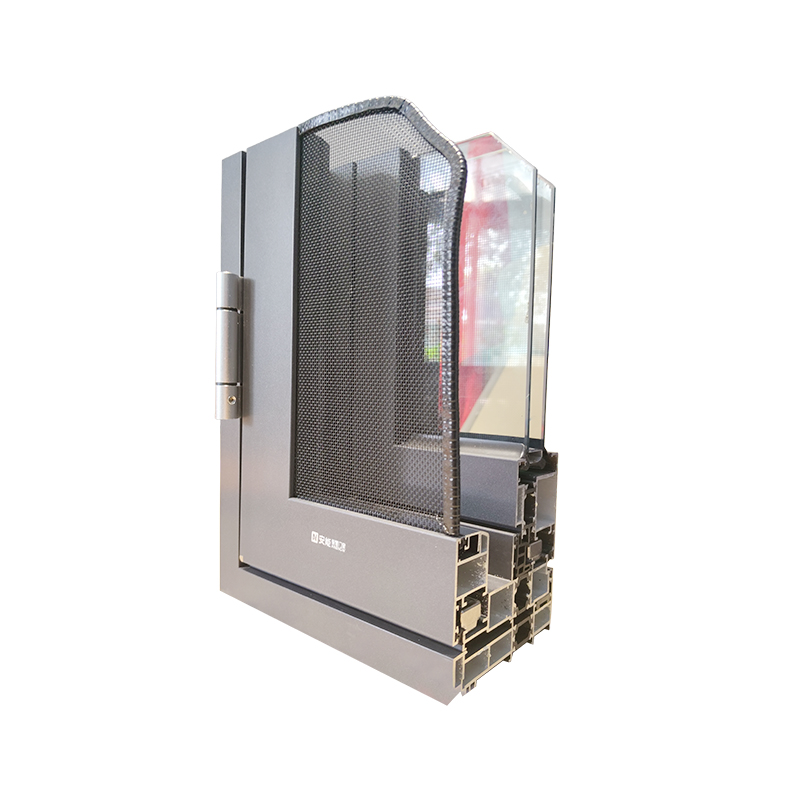
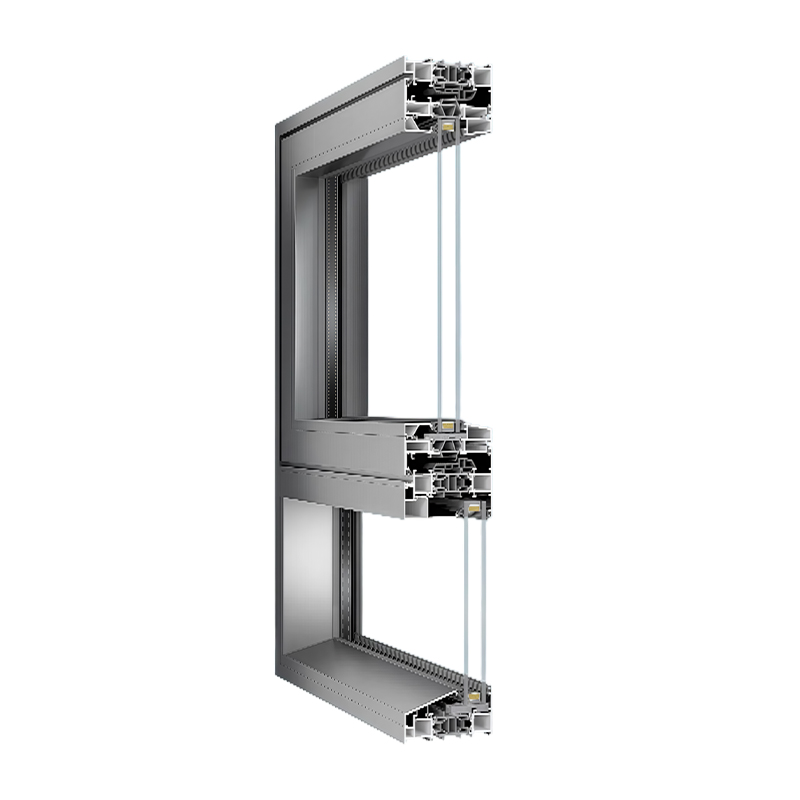
To ensure absolute safety, high-quality tilt-and-turn windows are meticulously designed. First, multiple sealing strips are used between the window sash and frame. Even when tilted inwards, the main seal remains closed, leaving only a controllable gap at the top, while the rest is tightly sealed. Second, the bottom of the window frame features concealed drainage holes and a pressure equalization chamber structure. Even if a very small amount of rainwater accidentally enters the window cavity, it can be quickly drained outdoors by gravity, preventing backflow. Furthermore, the window sill is usually designed with an outward slope or a water-resistant edge to further block rainwater backflow. These structures together constitute a three-in-one waterproof system of "prevention-guidance-drainage."
4. Advantages in Practical Applications
Tilt-and-turn windows offer particularly significant advantages during the rainy season in southern China, typhoon seasons along the coast, and the frequent showers in spring and autumn in northern China. Parents can confidently open windows in children's rooms for ventilation without worrying about sudden rainfall; high-humidity areas such as kitchens and bathrooms can benefit from micro-ventilation to accelerate moisture removal and reduce mold; offices and bedrooms can maintain fresh air even on rainy nights, improving sleep quality. Compared to traditional sliding or outward-opening windows, tilt-and-turn windows completely solve the dilemma of "ventilation and rain protection being mutually exclusive," truly achieving an all-weather, intelligent living experience.
The ability of tilt-and-turn windows to achieve "ventilation without water ingress" in rainy weather does not rely on complex technology, but rather stems from the ingenious application of natural physical laws and the combination of meticulous engineering design. With its simple yet efficient opening logic, it integrates safety, functionality, and comfort, becoming the preferred solution for modern high-quality residential and public building window systems. In today's pursuit of healthy living environments, this seemingly minor design innovation actually embodies a profound care for the details of life.
1. Unique Tilt-and-Turn Structure: Forming a Natural "Rain Curtain Barrier"
The core of tilt-and-turn windows lies in their hardware system, which supports two main opening states: regular inward opening and tilt-and-turn. On rainy days, users simply tilt the upper part of the window sash inward, while the lower part remains tightly closed to the frame. At this time, a tilting gap is formed between the window sash and the frame from top to bottom. When rainwater hits the window at an angle with the wind, most of the rainwater will flow down the glass surface due to gravity because the outer surface of the window sash is still basically vertical or slightly tilted, and is guided out by the windowsill or the drainage channel on the exterior wall. The inward-tilting opening gap is located on the upper inner edge of the window sash, making it difficult for rainwater to "turn" against gravity and wind direction to enter the room, thus forming a natural "rain curtain barrier."
2. Scientific Airflow Organization: Achieving a Balance Between Efficient Ventilation and Splash Prevention
When the window is tilted open, indoor and outdoor air can form convection through the upper gap: hot air is exhausted from above, and fresh air is slowly replenished from other areas of the room, creating a stable "chimney effect." While this micro-circulation ventilation is not as intense as a fully open window, it is sufficient to replace stale indoor air, reduce humidity, and prevent mold growth. More importantly, because the air inlet is located high and faces inward, even if a small amount of splashing raindrops are carried to the window by strong winds, they will quickly slide down to the windowsill drainage channel after hitting the upper inner edge of the window sash, rather than being sprayed directly into the indoor space. Experiments show that under common weather conditions of moderate to heavy rain and wind speeds ≤8, properly installed tilt-and-turn windows almost never experience rainwater seepage.
3. Multi-layered sealing and drainage system for coordinated protection
To ensure absolute safety, high-quality tilt-and-turn windows are meticulously designed. First, multiple sealing strips are used between the window sash and frame. Even when tilted inwards, the main seal remains closed, leaving only a controllable gap at the top, while the rest is tightly sealed. Second, the bottom of the window frame features concealed drainage holes and a pressure equalization chamber structure. Even if a very small amount of rainwater accidentally enters the window cavity, it can be quickly drained outdoors by gravity, preventing backflow. Furthermore, the window sill is usually designed with an outward slope or a water-resistant edge to further block rainwater backflow. These structures together constitute a three-in-one waterproof system of "prevention-guidance-drainage."
4. Advantages in Practical Applications
Tilt-and-turn windows offer particularly significant advantages during the rainy season in southern China, typhoon seasons along the coast, and the frequent showers in spring and autumn in northern China. Parents can confidently open windows in children's rooms for ventilation without worrying about sudden rainfall; high-humidity areas such as kitchens and bathrooms can benefit from micro-ventilation to accelerate moisture removal and reduce mold; offices and bedrooms can maintain fresh air even on rainy nights, improving sleep quality. Compared to traditional sliding or outward-opening windows, tilt-and-turn windows completely solve the dilemma of "ventilation and rain protection being mutually exclusive," truly achieving an all-weather, intelligent living experience.
The ability of tilt-and-turn windows to achieve "ventilation without water ingress" in rainy weather does not rely on complex technology, but rather stems from the ingenious application of natural physical laws and the combination of meticulous engineering design. With its simple yet efficient opening logic, it integrates safety, functionality, and comfort, becoming the preferred solution for modern high-quality residential and public building window systems. In today's pursuit of healthy living environments, this seemingly minor design innovation actually embodies a profound care for the details of life.