


How do tilt-and-turn windows achieve a perfect balance between ventilation and lighting through their unique opening mechanism?
Release Time : 2026-03-12
At the intersection of modern architectural aesthetics and functionalism, windows are no longer merely the "eyes" of a building, but also the core hub for regulating the indoor microclimate. Tilt-and-turn windows, with their unique dual opening mechanism, break the traditional trade-off between ventilation efficiency and lighting area, achieving a perfect balance between the two. Behind this superior performance lies meticulous craftsmanship across the entire process, from the profile structure to the sealing system; every detail reflects the pursuit of ultimate quality.
1. Dual Opening Mechanism: Flexible Control of Wind and Light
The core charm of tilt-and-turn windows lies in their flexible "two-in-one" operation. When the handle is rotated to a specific angle, the upper part of the window sash tilts inward, forming a narrow slit. This tilting mode utilizes the principle of rising hot air, guiding fresh outdoor air in from the bottom and expelling stale indoor air from the top, achieving gentle and efficient micro-ventilation, and preventing rainwater from entering the room even on rainy days. When the handle is rotated vertically, the window sash opens fully inward like a hinged door, providing 100% ventilation area and convenient cleaning access. This design not only maximizes natural light and eliminates visual obstructions, but also allows users to precisely control the amount of airflow and light entering according to weather changes and needs, truly achieving a dynamic balance between ventilation and lighting.
2. Robust Frame and Weather-Resistant Coating: 3.0mm Wall Thickness and Powder Coating
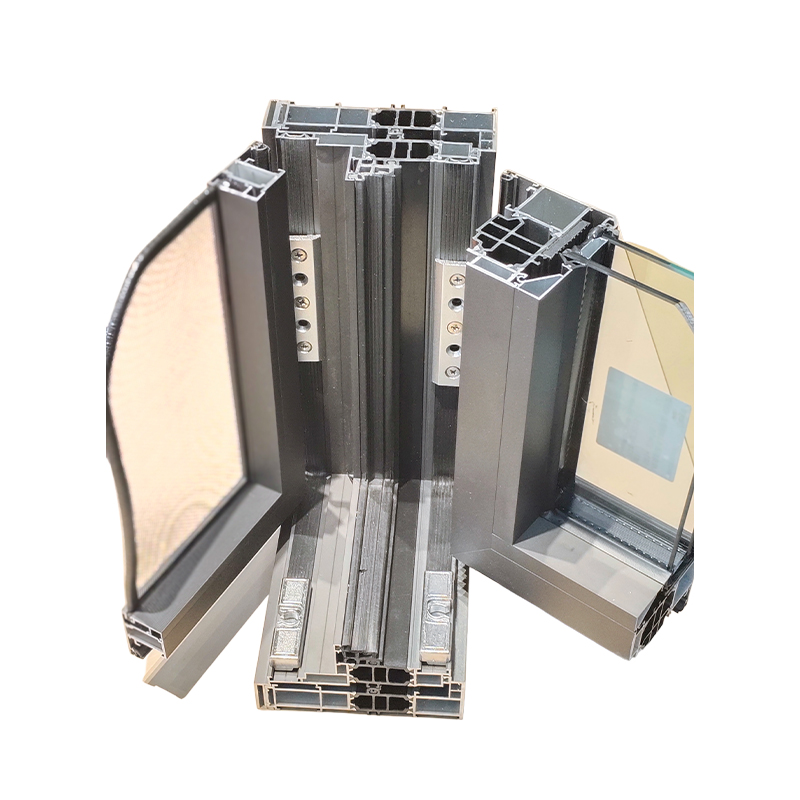
The superior opening and closing experience is built on a rock-solid physical foundation. These tilt-and-turn windows use high-strength profiles with a load-bearing wall thickness of up to 3.0mm, far exceeding industry standards, providing strong support for the large glass area and effectively preventing the window sash from sagging or deforming over long-term use. The weather-resistant metallic powder coating not only gives the window a rich color texture but also forms a dense protective barrier against ultraviolet rays, acid rain, and extreme temperature differences, ensuring that the window remains as good as new and structurally sound even decades later. With optional fixed closed square pressure curve and standard closed pressure curve designs, the window frame forms multiple sealing lines when closed, significantly enhancing wind pressure resistance and ensuring rock-solid stability even in typhoon-prone coastal areas.
3. Vertical Isothermal and Deep Insulation: Synergy of PA66-GF25 and Double-Layer Tempered Glass
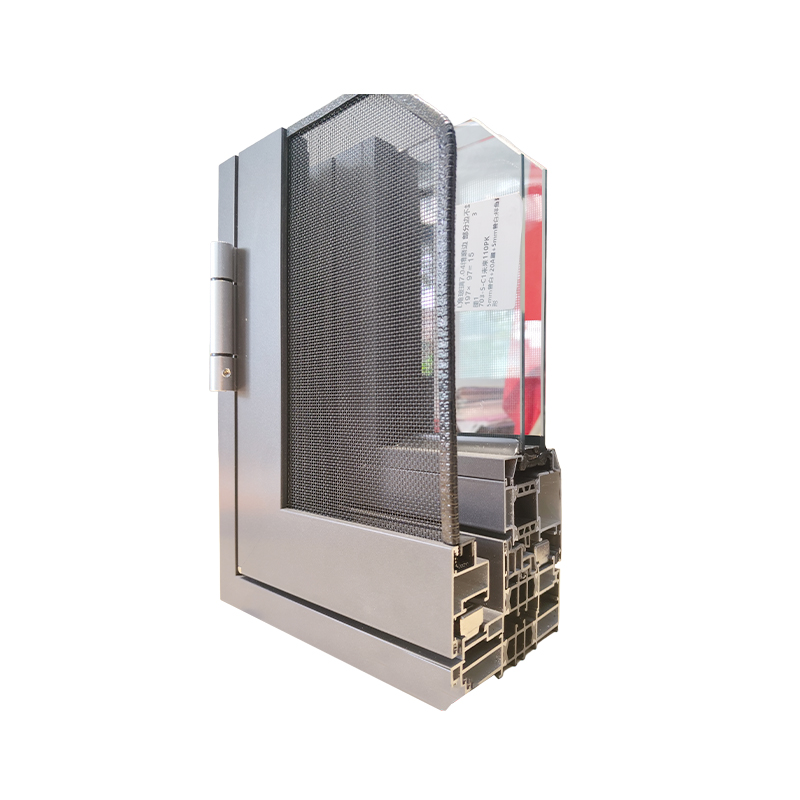
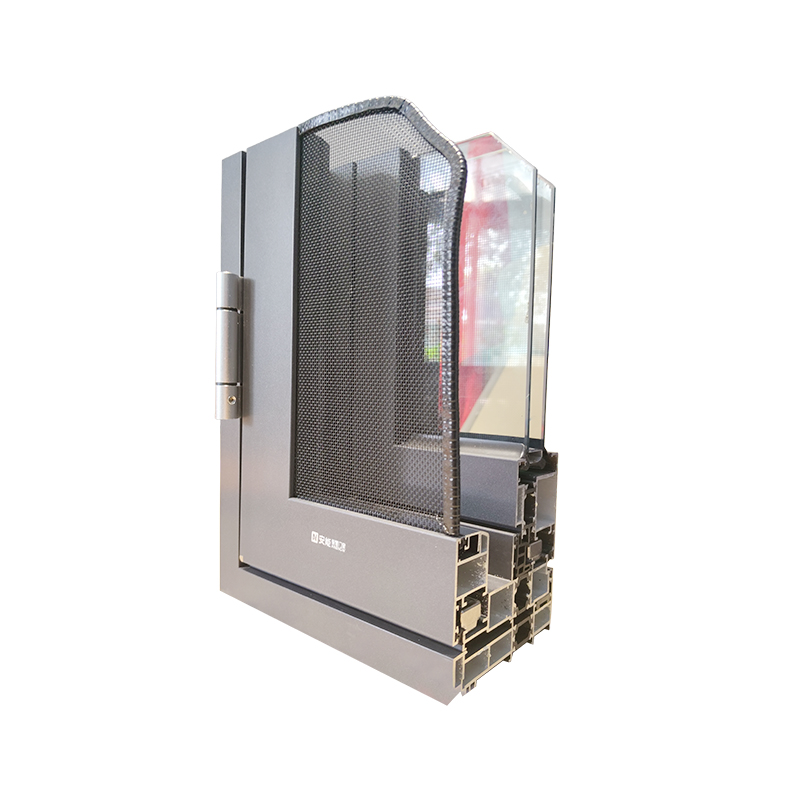
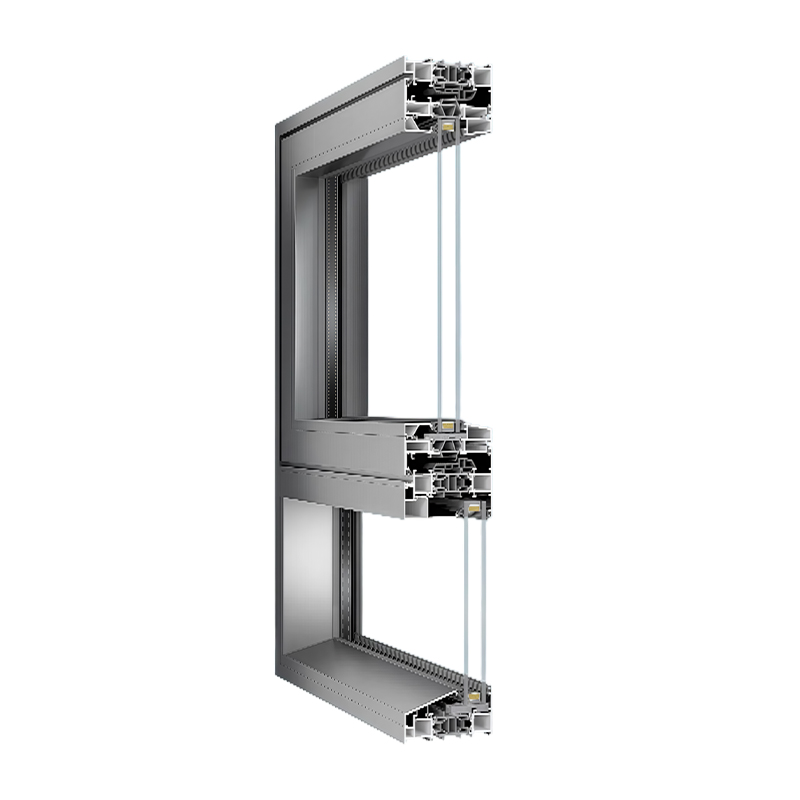
In today's world where energy conservation and emission reduction are paramount, this window elevates thermal insulation, sound insulation, and airtightness to a new level through its integrated vertical isothermal design. The core AIVIS PA66-GF25 insulation strip is not only flame-retardant and wear-resistant, but also, with its extremely low thermal conductivity, cuts off the "bridge" for heat transfer between indoors and outdoors. Combined with 5+20A+5mm double-layer tempered glass and an internal curved aluminum strip further blocks heat conduction and reduces noise, forming a powerful thermal barrier. Whether in scorching heat or freezing cold, the indoor temperature remains constant, significantly reducing air conditioning energy consumption. Meanwhile, the outer frame and window sash utilize a two-component adhesive injection process, with adhesive meticulously applied at corners and cross-sections, eliminating the leakage risks of traditional seams and achieving a structurally robust seal.
4. Wisdom in the Details: Automatic Drainage and Safety Protection
True perfection often lies in the unseen details. The unique drain system features automatic opening and closing, utilizing gravity and air pressure differences to quickly drain accumulated rainwater during rainfall and automatically close in sunny weather to prevent backflow and pests, ensuring rapid and smooth drainage. For safety, the standard metal R-shaped corner protectors not only enhance the structural strength of the screen but also optimize the force distribution during opening, preventing accidental pinching or collision injuries. Combined with the integrated vulcanized rubber strip design, its excellent elastic recovery ensures long-term sound insulation and sealing, making every opening and closing silent.
In conclusion, tilt-and-turn windows successfully resolve the conflict between ventilation and lighting through unique opening and closing logic and exquisite craftsmanship. With a 3.0mm thick wall as its framework, isothermal insulation technology as its core, and intelligent drainage and safety details as its wings, it provides modern buildings with an ideal solution that is both transparent and safe, both energy-efficient and comfortable.
1. Dual Opening Mechanism: Flexible Control of Wind and Light
The core charm of tilt-and-turn windows lies in their flexible "two-in-one" operation. When the handle is rotated to a specific angle, the upper part of the window sash tilts inward, forming a narrow slit. This tilting mode utilizes the principle of rising hot air, guiding fresh outdoor air in from the bottom and expelling stale indoor air from the top, achieving gentle and efficient micro-ventilation, and preventing rainwater from entering the room even on rainy days. When the handle is rotated vertically, the window sash opens fully inward like a hinged door, providing 100% ventilation area and convenient cleaning access. This design not only maximizes natural light and eliminates visual obstructions, but also allows users to precisely control the amount of airflow and light entering according to weather changes and needs, truly achieving a dynamic balance between ventilation and lighting.
2. Robust Frame and Weather-Resistant Coating: 3.0mm Wall Thickness and Powder Coating
The superior opening and closing experience is built on a rock-solid physical foundation. These tilt-and-turn windows use high-strength profiles with a load-bearing wall thickness of up to 3.0mm, far exceeding industry standards, providing strong support for the large glass area and effectively preventing the window sash from sagging or deforming over long-term use. The weather-resistant metallic powder coating not only gives the window a rich color texture but also forms a dense protective barrier against ultraviolet rays, acid rain, and extreme temperature differences, ensuring that the window remains as good as new and structurally sound even decades later. With optional fixed closed square pressure curve and standard closed pressure curve designs, the window frame forms multiple sealing lines when closed, significantly enhancing wind pressure resistance and ensuring rock-solid stability even in typhoon-prone coastal areas.
3. Vertical Isothermal and Deep Insulation: Synergy of PA66-GF25 and Double-Layer Tempered Glass
In today's world where energy conservation and emission reduction are paramount, this window elevates thermal insulation, sound insulation, and airtightness to a new level through its integrated vertical isothermal design. The core AIVIS PA66-GF25 insulation strip is not only flame-retardant and wear-resistant, but also, with its extremely low thermal conductivity, cuts off the "bridge" for heat transfer between indoors and outdoors. Combined with 5+20A+5mm double-layer tempered glass and an internal curved aluminum strip further blocks heat conduction and reduces noise, forming a powerful thermal barrier. Whether in scorching heat or freezing cold, the indoor temperature remains constant, significantly reducing air conditioning energy consumption. Meanwhile, the outer frame and window sash utilize a two-component adhesive injection process, with adhesive meticulously applied at corners and cross-sections, eliminating the leakage risks of traditional seams and achieving a structurally robust seal.
4. Wisdom in the Details: Automatic Drainage and Safety Protection
True perfection often lies in the unseen details. The unique drain system features automatic opening and closing, utilizing gravity and air pressure differences to quickly drain accumulated rainwater during rainfall and automatically close in sunny weather to prevent backflow and pests, ensuring rapid and smooth drainage. For safety, the standard metal R-shaped corner protectors not only enhance the structural strength of the screen but also optimize the force distribution during opening, preventing accidental pinching or collision injuries. Combined with the integrated vulcanized rubber strip design, its excellent elastic recovery ensures long-term sound insulation and sealing, making every opening and closing silent.
In conclusion, tilt-and-turn windows successfully resolve the conflict between ventilation and lighting through unique opening and closing logic and exquisite craftsmanship. With a 3.0mm thick wall as its framework, isothermal insulation technology as its core, and intelligent drainage and safety details as its wings, it provides modern buildings with an ideal solution that is both transparent and safe, both energy-efficient and comfortable.