


Do tilt-and-turn windows synergistically enhance wind pressure resistance and airtightness?
Release Time : 2025-12-17
In modern architecture, with its pursuit of energy conservation, comfort, and safety, windows have long transcended their basic role of "light transmission and ventilation," becoming a crucial performance element in the building envelope. Especially in high-rise residential buildings, coastal areas, or regions with variable climates, the wind pressure challenges faced by windows are increasingly severe. Whether tilt-and-turn windows, with their unique structural design and precision manufacturing, can synergistically enhance wind pressure resistance and airtightness directly determines their ability to protect indoor tranquility and temperature stability during storms.
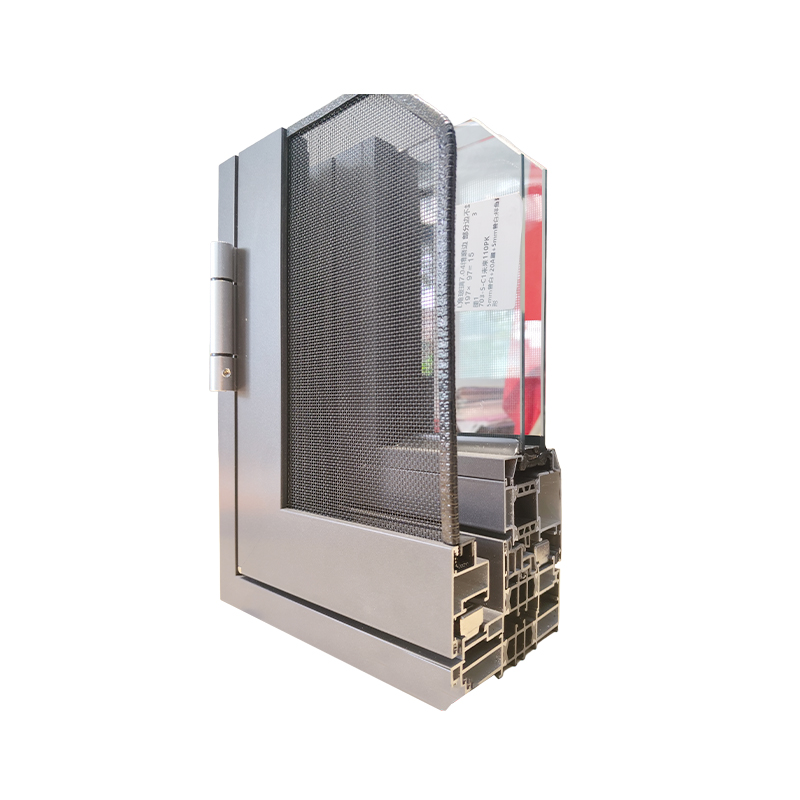
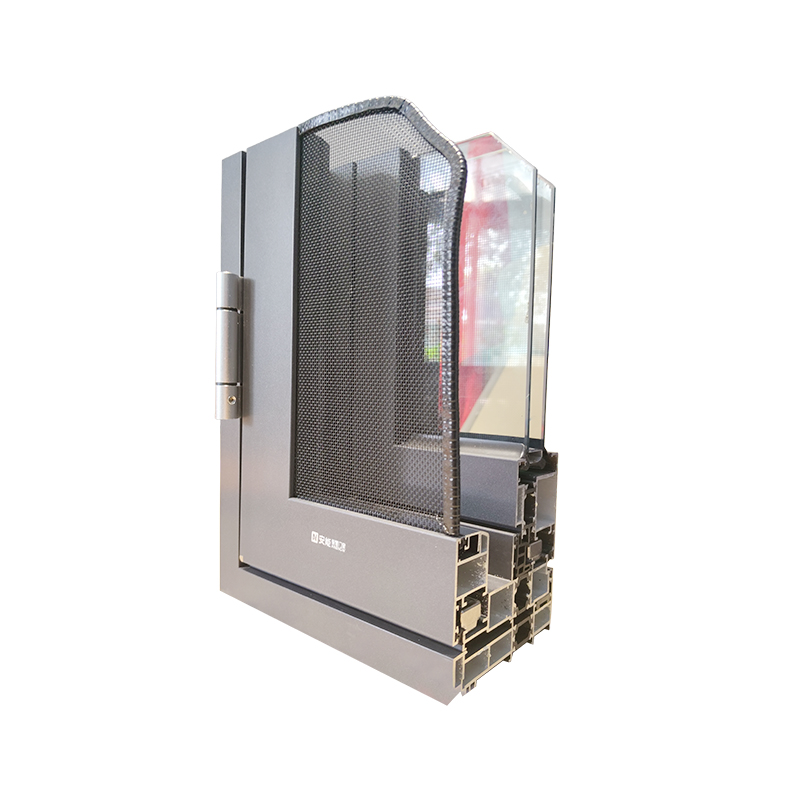
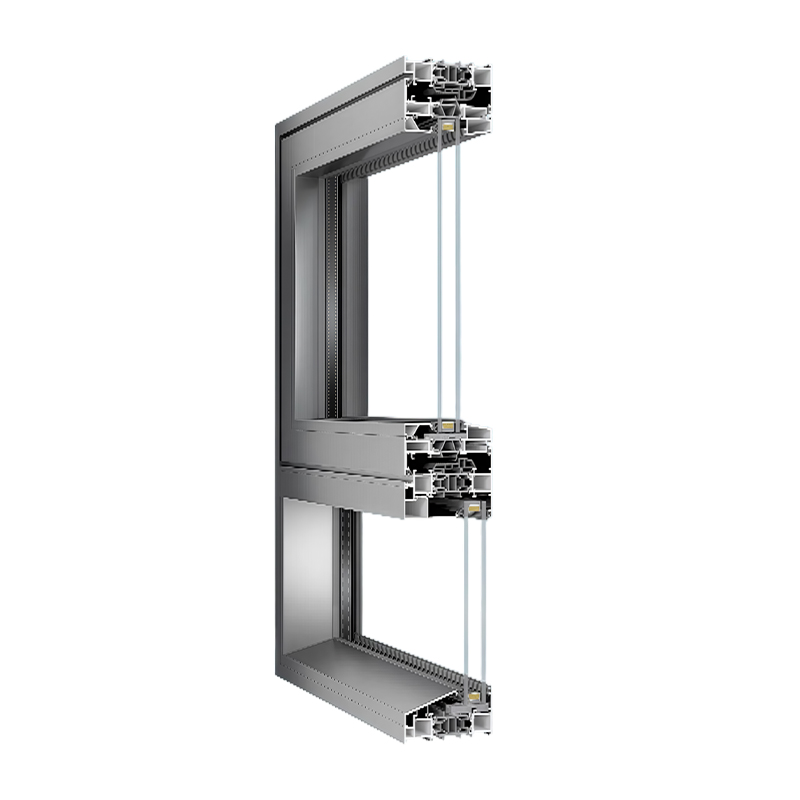
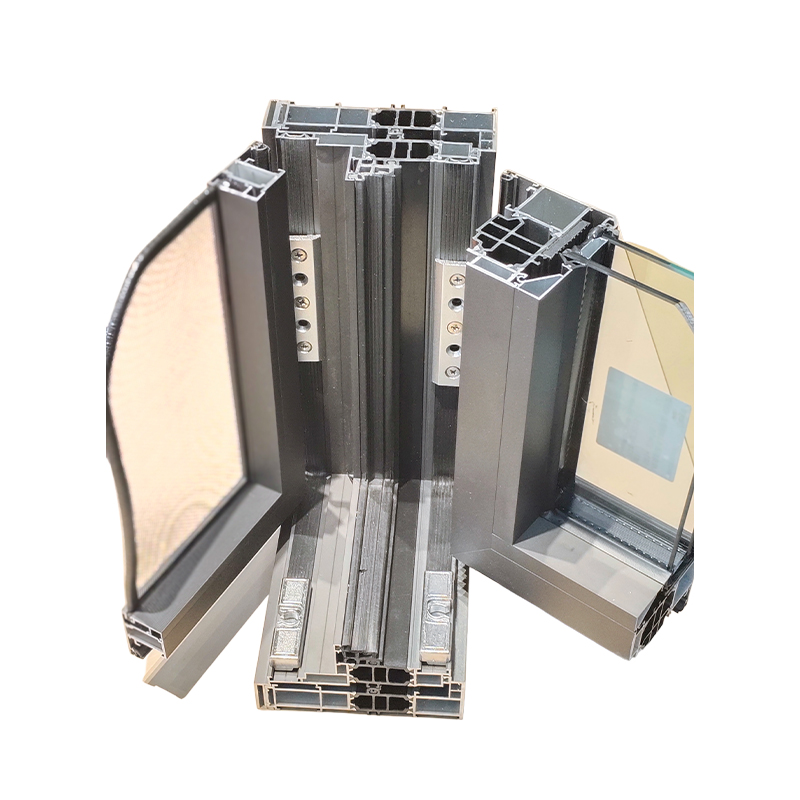
Wind pressure resistance stems first and foremost from a strong structural frame. Tilt-and-turn windows use 3.0 mm thick profiles as the load-bearing skeleton, and a two-component high-performance adhesive is injected into the corners and cross-sections of the outer frame and window sash, forming a rigid, closed, integrated frame. This "seamless corner integration" process not only improves visual simplicity but also fundamentally eliminates the micro-gaps and stress concentration points that may occur with traditional mechanical corner assembly. When strong winds strike, the stress on the window is evenly distributed throughout the entire structure, rather than concentrated at a single point, effectively resisting the risk of deformation, twisting, and even glass breakage.
Air tightness is ensured through the precision of the seals. Tilted-and-turn windows construct a defense system through multiple sealing mechanisms: the window frame and sash employ a dual-interlocking design with both a selectable fixed closed square pressure curve and a standard closed pressure curve, forming a dynamic sealing band; this is complemented by an integrated vulcanized rubber sealing strip, whose dense molecular structure and excellent resilience allow it to maintain a tight fit even after prolonged compression; and the vertical isothermal integrated design ensures a high degree of synergy between the insulation cavity and the sealing path, eliminating channels for the convection of hot and cold air. This three-pronged sealing strategy of "structure + materials + process" leaves no gaps for wind and rain, and makes it difficult for dust to penetrate.
Crucially, wind pressure resistance and air tightness are not isolated properties, but rather mutually reinforcing and synergistic. When the window frame maintains geometric stability under strong winds, the sealing interface will not develop gaps due to the bending of the profile; conversely, a tight seal reduces the impact of wind pressure on the internal structure, creating a virtuous cycle. For example, during typhoon weather, ordinary windows may experience seal failure due to slight deformation, allowing rainwater to be "squeezed" into the room by wind pressure; while high-performance tilt-and-turn windows, with their overall rigidity and multiple seals, firmly isolate wind and rain from the outside while maintaining stable indoor temperature and humidity.
Furthermore, their tilting and rotating opening mechanism itself embodies wisdom—when closed, the window sash and frame are locked at multiple points, resulting in more balanced force; when open, it tilts inward around the top axis, avoiding the wind resistance risks of fully outward opening while allowing limited ventilation without water ingress during rainy weather. This design philosophy reflects respect for and clever guidance of natural forces.
Ultimately, whether tilt-and-turn windows synergistically enhance wind pressure resistance and airtightness is not a matter of simply piling up single technologies, but a systematic integration of material selection, structural mechanics, sealing science, and manufacturing processes. It stands silently through storms and quietly conserves energy in everyday life—responding to nature's challenges with precision engineering and safeguarding the tranquility of life with a silent barrier. This is not merely an evolution of windows, but a profound expression of architecture's human-centered care.
Wind pressure resistance stems first and foremost from a strong structural frame. Tilt-and-turn windows use 3.0 mm thick profiles as the load-bearing skeleton, and a two-component high-performance adhesive is injected into the corners and cross-sections of the outer frame and window sash, forming a rigid, closed, integrated frame. This "seamless corner integration" process not only improves visual simplicity but also fundamentally eliminates the micro-gaps and stress concentration points that may occur with traditional mechanical corner assembly. When strong winds strike, the stress on the window is evenly distributed throughout the entire structure, rather than concentrated at a single point, effectively resisting the risk of deformation, twisting, and even glass breakage.
Air tightness is ensured through the precision of the seals. Tilted-and-turn windows construct a defense system through multiple sealing mechanisms: the window frame and sash employ a dual-interlocking design with both a selectable fixed closed square pressure curve and a standard closed pressure curve, forming a dynamic sealing band; this is complemented by an integrated vulcanized rubber sealing strip, whose dense molecular structure and excellent resilience allow it to maintain a tight fit even after prolonged compression; and the vertical isothermal integrated design ensures a high degree of synergy between the insulation cavity and the sealing path, eliminating channels for the convection of hot and cold air. This three-pronged sealing strategy of "structure + materials + process" leaves no gaps for wind and rain, and makes it difficult for dust to penetrate.
Crucially, wind pressure resistance and air tightness are not isolated properties, but rather mutually reinforcing and synergistic. When the window frame maintains geometric stability under strong winds, the sealing interface will not develop gaps due to the bending of the profile; conversely, a tight seal reduces the impact of wind pressure on the internal structure, creating a virtuous cycle. For example, during typhoon weather, ordinary windows may experience seal failure due to slight deformation, allowing rainwater to be "squeezed" into the room by wind pressure; while high-performance tilt-and-turn windows, with their overall rigidity and multiple seals, firmly isolate wind and rain from the outside while maintaining stable indoor temperature and humidity.
Furthermore, their tilting and rotating opening mechanism itself embodies wisdom—when closed, the window sash and frame are locked at multiple points, resulting in more balanced force; when open, it tilts inward around the top axis, avoiding the wind resistance risks of fully outward opening while allowing limited ventilation without water ingress during rainy weather. This design philosophy reflects respect for and clever guidance of natural forces.
Ultimately, whether tilt-and-turn windows synergistically enhance wind pressure resistance and airtightness is not a matter of simply piling up single technologies, but a systematic integration of material selection, structural mechanics, sealing science, and manufacturing processes. It stands silently through storms and quietly conserves energy in everyday life—responding to nature's challenges with precision engineering and safeguarding the tranquility of life with a silent barrier. This is not merely an evolution of windows, but a profound expression of architecture's human-centered care.